The first thing almost every visitor to Plymouth Rock says is some version of "that's it?" It sits at the bottom of a pit under a granite portico on the waterfront, a gray boulder with "1620" carved into it, smaller than you pictured and protected by railings. I said it too, the first time.
The rock is a good place to start, though, precisely because it isn't what you expect. Plymouth, about 40 miles south of Boston, is a town that has spent the last few decades complicating its own origin story, and if you go around Thanksgiving, when interest peaks, you'll find a much fuller version of 1620 and 1621 than the one most of us learned in grade school.
Thanksgiving falls on November 26 this year, and the town gets busy in the weeks before it. Here is the history worth knowing, and where to see it.
The land already had a name
When the Mayflower reached Cape Cod in November 1620, its passengers spent weeks exploring before choosing a site on the mainland in December. The harbor they settled was the site of Patuxet, a Wampanoag village whose people had been devastated by an epidemic in the years just before the English arrived. The cleared fields the settlers found were Patuxet's fields.
That is also where Tisquantum, better known as Squanto, came from. He had been kidnapped years earlier by an English captain and taken across the Atlantic, eventually made his way back, and found his home village gone. He ended up living among the English and helping them as an interpreter, which is a stranger and sadder story than the friendly helper of the school play.
What actually happened in 1621
The gathering we call the first Thanksgiving is documented in one short letter by the colonist Edward Winslow. He described a harvest celebration in the autumn of 1621, and noted that the Wampanoag leader Massasoit arrived with about ninety men, that the event lasted three days, and that the Wampanoag brought five deer.
That's most of what the primary source says. Winslow did not call it a thanksgiving, and the menu people argue about every November (turkey or not, pie or not) mostly goes beyond what the record supports. The alliance between Massasoit and the colonists was a political arrangement made by two groups who each had reasons to want it, and it did not last into the next generation.
Plimoth Patuxet and the Mayflower II
The town's big museum is Plimoth Patuxet Museums, which changed its name from Plimoth Plantation in 2020 to put the Wampanoag name back alongside the English one. It has two very different halves, and I'd give both real time.
In the 17th-century English Village, interpreters play specific colonists in the first person. They'll talk to you as if it were the 1620s, and they're good at it. Ask about the weather or the neighbors and see how long you can keep them going.
The Historic Patuxet Homesite is different on purpose. It is staffed by Native people dressed in traditional clothing but speaking from today, as themselves. You can ask direct questions about Wampanoag life, then and now, and you'll get thoughtful, sometimes pointed answers. For a lot of visitors it's the most memorable part of the trip.
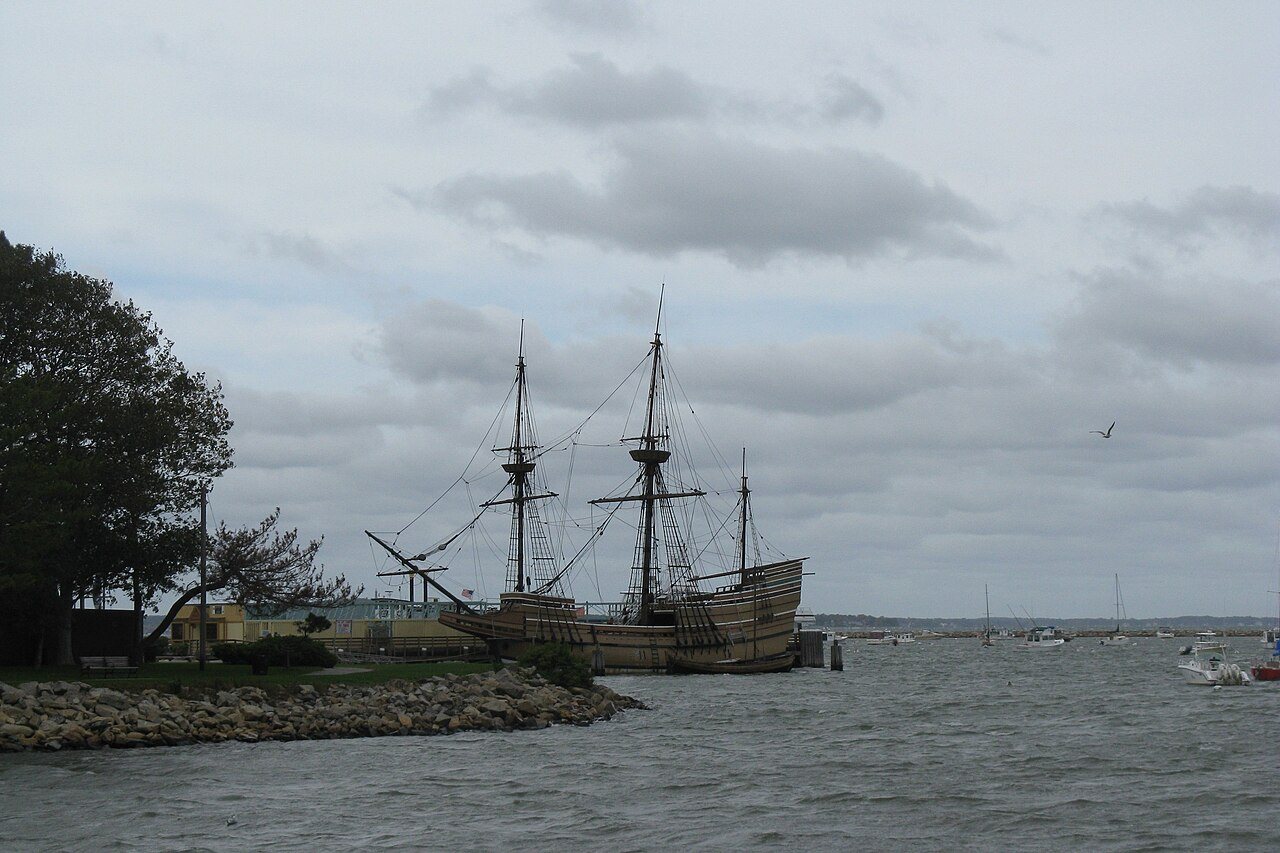
Down on the waterfront, a short walk from the rock, is the Mayflower II, a full-scale reproduction built in England and sailed across the Atlantic in 1957. It was restored at Mystic Seaport in Connecticut in time for the 400th anniversary in 2020. Climbing below deck is the fastest way to understand how cramped that crossing must have been.
The outdoor exhibits and the ship run on a seasonal schedule, so check the museum's current opening dates before you build a day around them.
Pilgrim Hall and Cole's Hill
Pilgrim Hall Museum, a few minutes' walk from the harbor, opened in 1824 and describes itself as the oldest continuously operating public museum in the United States. It holds real objects that came over with or belonged to the early colonists, which after the replicas is a nice change.
Above the rock is Cole's Hill, where a statue of Massasoit looks out over the harbor. On Thanksgiving Day, the United American Indians of New England gather there for the National Day of Mourning, a tradition going back to 1970, to remember the Native people lost to colonization and to speak about Native issues today. If you are in town that day, it's a public event, and attending respectfully is a very different way to spend the holiday than a parade.
Making the trip work in November
Plymouth also holds a Thanksgiving parade and festival, usually on the weekend before the holiday. Dates change from year to year, so confirm them before you go. Book a room early if you want that weekend, and expect busy restaurants near the waterfront.
Dress for the harbor. November on the Massachusetts coast can be raw, and the wind off the water at the rock and the ship is no joke. Bring a hat, and gloves if you plan to linger on the ship.
If you only have one day, I'd do it in this order: the rock and Cole's Hill first thing while it's quiet, the Mayflower II if it's open, Pilgrim Hall over lunch, and the Patuxet Homesite and English Village in the afternoon. You'll leave with the school-pageant version properly rearranged, which is the whole reason to go.
See more of us on GoogleAdd TrueVoyager as a preferred source and our stories can show up more often for you in Top Stories.