Photo: Daniel Case, CC BY-SA 3.0, via Wikimedia Commons
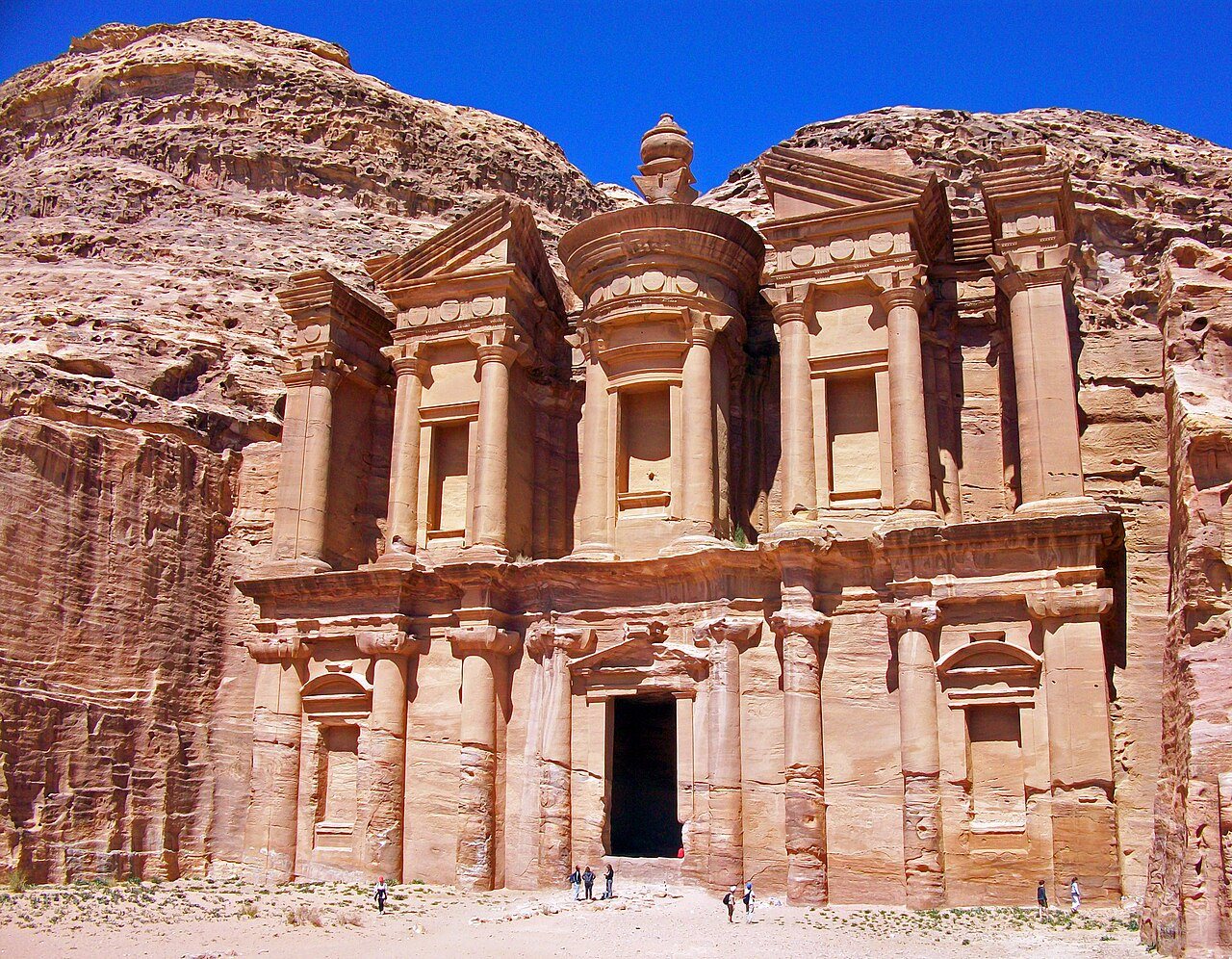
The first time most people see the Treasury at Petra, they see it in pieces. The path through the Siq, a narrow gorge in the sandstone, bends and narrows for more than a kilometre, with walls rising high overhead. Then a thin slice of rose-coloured carved stone appears between the rocks ahead, and a few steps later the whole facade opens up at once.
That moment is the same in any season. What changes is everything around it. In summer, Petra is hot, exposed and tiring, and the long climbs to the high viewpoints are a real slog in the midday sun. From roughly November to March the air is cool, the light sits low and warm on the cliffs, and walking six or seven hours a day becomes a pleasure instead of an endurance test.
I would go in winter every time. You just need to pack for it, because the desert gets properly cold after dark.
A city carved by the Nabataeans
Petra was the capital of the Nabataeans, an Arab people who grew rich on the caravan trade in incense and spices that passed through this part of southern Jordan. Most of the monuments visitors see date from around the 1st century BC to the 1st century AD. In 106 AD the kingdom was absorbed into the Roman Empire, and the city slowly declined over the following centuries.
The Bedouin of the area always knew it was there. Europeans did not, until the Swiss traveller Johann Ludwig Burckhardt talked his way in, disguised as a pilgrim, in 1812. Petra became a UNESCO World Heritage Site in 1985 and has been Jordan's best known attraction ever since.
What makes it unusual is that the big monuments were not built. They were cut down into the rock face, from the top, which is why their facades are so crisp and the rooms behind them are so plain.
The Siq, the Treasury and the main valley
Almost every visit starts at the visitor centre in Wadi Musa, the town that sits just outside the site. From the gate it is a walk of a couple of kilometres down to the Treasury, first along an open path and then through the Siq.
The Treasury, Al-Khazneh in Arabic, is the famous facade. Its name comes from a local legend that treasure was hidden in the stone urn at the top (you can still see the bullet marks where people tried to shoot it open). It was most likely a royal tomb. Beyond it the valley widens into the Street of Facades, a Roman style theatre cut into the hillside, the Royal Tombs high on the cliff and a colonnaded street.
Even this core route takes a good half day if you stop to look, and the ground is uneven sand and stone. Wear proper walking shoes.
The climb to the Monastery
If you have the legs for one serious climb, make it Ad Deir, the Monastery. It sits high above the main valley at the top of a long rock-cut stairway, usually described as around 800 steps. The facade is even larger than the Treasury's, and because it takes effort to reach, it is often far quieter.
This is where winter really earns its keep. The climb is mostly exposed, and in summer the heat on the stairs can be brutal. On a cool winter morning it is a steady, enjoyable hour. There are viewpoints beyond the Monastery looking west toward Wadi Araba that are worth the extra ten minutes.
Other good walks include the High Place of Sacrifice, reached by a separate stairway near the theatre, and the trail that climbs to a viewpoint above the Treasury. Local guides can lead you on both, and on the quieter back routes.
What winter weather actually means
Winter in Petra is generally mild by day and chilly at night. Mornings and evenings can be cold enough for a warm jacket, hat and gloves, and frost is not unusual. Occasional rain is part of the season, and once in a while there is even snow on the higher ground.
Rain matters more here than in most places. The Siq can flood quickly during heavy storms, and the authorities close parts of the site when flash floods are a risk. If rain is forecast, keep your plans flexible and follow what the rangers say, even if the sky looks clear where you are standing.
The other trade-off is daylight. Days are shorter in winter, so start early. Being at the gate when it opens gives you the Siq with very few other people in it, and the morning light on the Treasury is lovely.
Planning your visit
Give Petra at least two days. One day covers the main valley and the Monastery at a brisk pace, but a second lets you do the quieter trails and revisit the Treasury in different light. Multi-day tickets are available, and many visitors buy the Jordan Pass, which bundles entry to Petra with other sites and covers the tourist visa fee for eligible travellers. Check the official Jordan Pass and Petra websites for current prices and conditions before you go.
Petra by Night, when the Siq and the Treasury square are lit with candles, runs on a few evenings each week. In winter it gets cold, so bring the warm layers. Nearby Little Petra, a short drive north, is smaller and free to wander, and it makes a good half-day add-on.
Most travellers reach Wadi Musa by road from Amman, which takes around three hours, or from Aqaba in the south. Book a hotel within walking distance of the visitor centre if you can, so that early starts and tired evenings do not depend on a taxi.
See more of us on GoogleAdd TrueVoyager as a preferred source and our stories can show up more often for you in Top Stories.