Photo: Andrzej Otrębski, CC BY-SA 4.0, via Wikimedia Commons
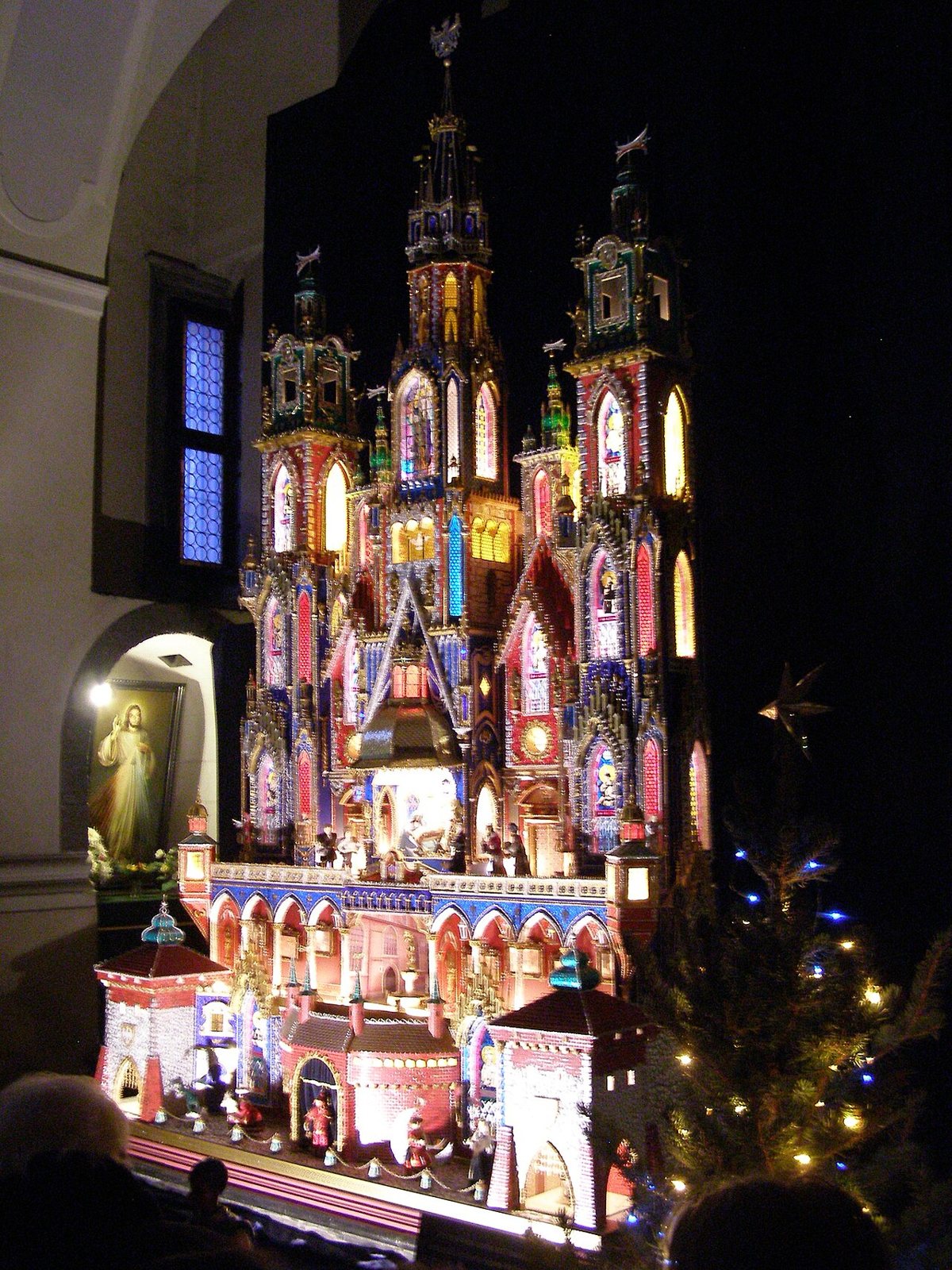
Most nativity scenes are a stable, some straw and a few figures. In Kraków the stable has been replaced by a cathedral. A Kraków szopka (plural szopki) is a tall, many-towered structure built from cardboard, wood and shiny foil, with spires borrowed from the city's churches and the holy family tucked into a lit niche somewhere near the bottom.
Seen in person they are a little overwhelming, in a good way. Every surface glitters. Some are small enough to carry under one arm; the biggest are taller than the people who made them, with moving figures and tiny lights in every window.
Every December the city holds a competition to choose the best ones, and the makers carry their work into the Main Market Square for judging. If you are heading to Poland for the Christmas markets, it is one of the most charming things you can plan a trip around.
Cathedrals in miniature
The look is very specific, and once you have been to Kraków you will recognize it everywhere. The two unequal towers of St. Mary's Basilica appear again and again, along with domes and turrets from Wawel Castle and its cathedral, the arcades of the Cloth Hall and bits of the old city walls. Makers mix and stack them freely. The result looks like a dream version of the whole old town squeezed onto one tabletop.
The materials are humble. Traditional szopki are made of cardboard and thin wood, then covered in colored foil, glitter, beads and paper. Older ones used sweet wrappers and other scraps that families could get hold of cheaply. In the center there is usually a stage for the nativity, and many also include figures from Polish and Kraków history and legend, from kings to the dragon of Wawel Hill.
From winter side income to puppet theater
The tradition took shape in the nineteenth century. It is usually traced to craftsmen from villages on the edge of Kraków, especially builders and masons, who had little work in winter and began making these scenes to earn money during the Christmas season.
At first many szopki doubled as small portable theaters. Groups carried them from house to house and performed puppet shows inside them, mixing the nativity story with comic local characters and topical jokes. That habit of poking fun at public life stuck around. In the early 1900s the artists of the Green Balloon cabaret in Kraków put on satirical szopka shows with puppets of well known local figures, which I suspect were enjoyed most by the people who were not in them.
The walking puppet shows faded in the twentieth century, but the craft did not.
The contest on the Main Market Square
In 1937 a competition was organized to keep the tradition going, and apart from interruptions in the war years it has continued ever since. Since the end of the war it has been run by the city's historical museum, now known as the Museum of Kraków.
The format has barely changed. On the first Thursday of December the makers bring their szopki to the Main Market Square and line them up around the statue of the poet Adam Mickiewicz, where the public can look at them before they go in for judging. Entries range from children's first attempts to huge, elaborate pieces by makers who have been building them for decades, sometimes in family workshops passed between generations. (The first Thursday of December this year falls on December 3, but check the museum's announcements before you book anything around it.)
In 2018 UNESCO added the Kraków szopka tradition to its list of the intangible cultural heritage of humanity, the first Polish entry on that list.
How to see szopki when you visit
The day of the competition is the busiest and most atmospheric time to see them, but it is also cold and crowded, so dress for standing still outdoors in December and get there early.
If you miss it, you still have options. After the judging, the Museum of Kraków traditionally puts the prize winning szopki on display in an exhibition that runs into the new year. Exhibition venues and dates change, so look at the museum's website for this season's details. Some churches in the city also display szopki over Christmas, and the one in the photo above was shown in the Franciscan church.
Small szopki are sold at stalls and in shops around the old town, especially during the Christmas market on the Main Market Square. A handmade one is not a cheap souvenir, but it is a lot more interesting than a fridge magnet, and it will make every other nativity scene you own look rather plain.
A few tips for a December visit
Kraków in December is cold and dark early, which is part of the appeal. The Christmas market fills the square, the churches are lit up, and the city is compact enough that you can walk between most of the sights, including Wawel Hill and the old Jewish quarter of Kazimierz.
Book accommodation early if you want to be there for the competition, since the first week of December is popular. Pack proper winter boots for icy cobbles. And when you stand in front of a szopka, look closely at the small figures around the edges. That is where makers like to hide jokes, local characters and the occasional dragon, and spotting them is half the fun.
See more of us on GoogleAdd TrueVoyager as a preferred source and our stories can show up more often for you in Top Stories.