Photo: Froggieboy, CC BY-SA 4.0, via Wikimedia Commons
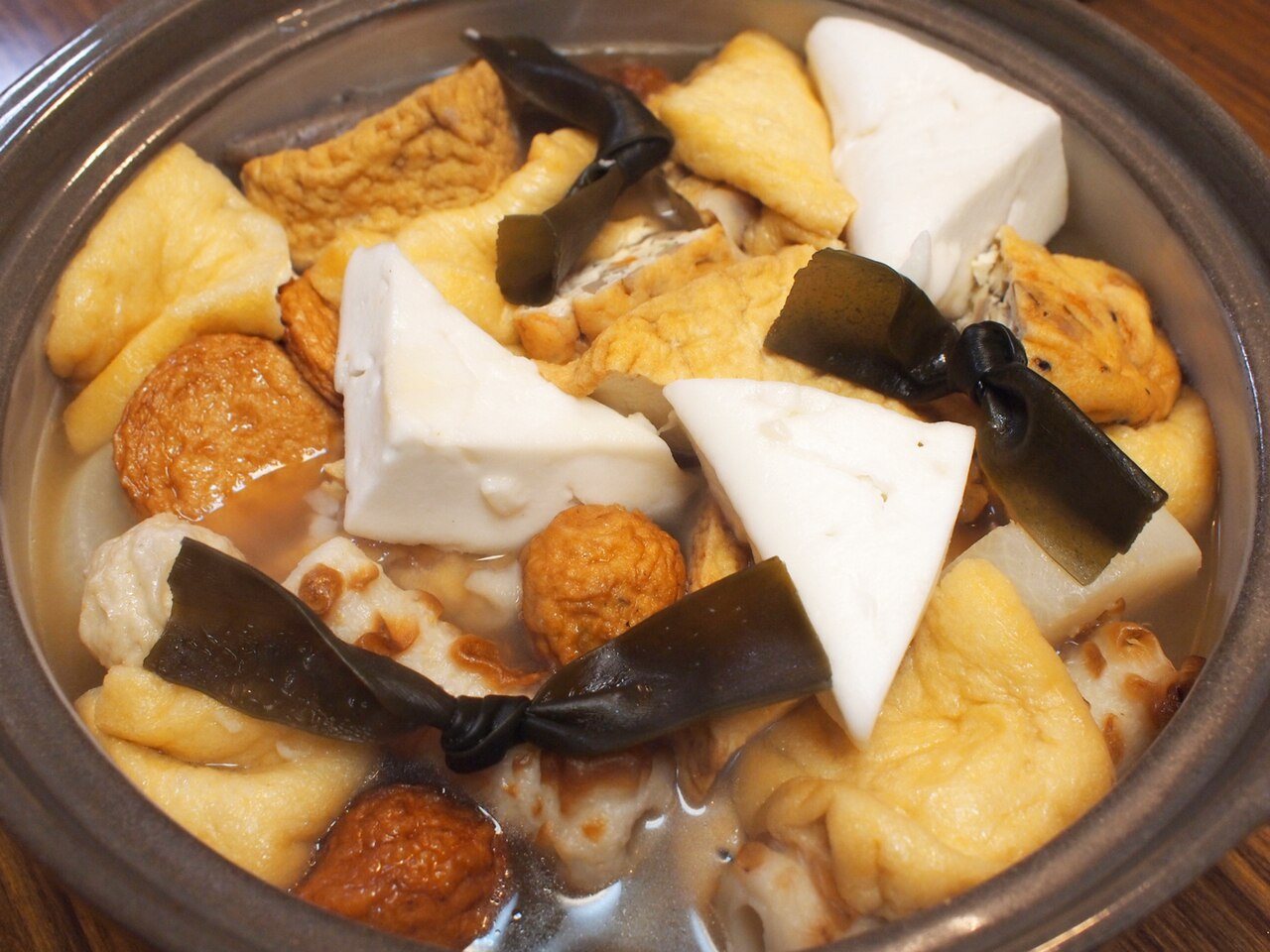
The first time I ate oden, it came out of a convenience store in Tokyo on a cold night, and I had no idea what I was pointing at. There was a steel tray of light brown broth by the till, full of things gently bobbing about: eggs, big white discs of radish, grey jelly triangles, tubes and puffy squares of something I later learned was fish cake. I picked four things more or less at random, added a squirt of mustard from a sachet, and ate it standing outside. It was exactly what I needed.
Oden is Japan's great winter comfort food. It's a one-pot dish of ingredients simmered for a long time in a light, savoury broth, and you'll find it everywhere from neighbourhood bars to street stalls to the 7-Eleven on the corner. If you're travelling to Japan between autumn and early spring, it's worth knowing what you're looking at.
What actually goes in the pot
The broth is usually dashi, the basic Japanese stock made from kombu seaweed and dried bonito flakes, seasoned with soy sauce and often a little mirin. It's meant to be gentle. The ingredients soak it up slowly, and they're better after hours in the pot than after minutes.
The usual suspects are thick slices of daikon radish, hard-boiled eggs, konnyaku (a firm, slightly springy jelly made from the konjac plant, with very little flavour of its own), and many kinds of fish cake. Chikuwa are the tubes with a browned outside. Hanpen are the soft, fluffy white squares or triangles, almost like a marshmallow made of fish. You'll also see fried tofu, knots of kombu, and in some places skewers of beef tendon.
My advice for a first go: get the daikon and an egg, then one fish cake you don't recognise. The daikon is the one most people end up loving. It soaks up so much broth it nearly melts.
Ordering oden at a convenience store
Convenience stores in Japan have sold oden for decades, and for many people in Japan this is the version they eat most. It usually appears near the counter as the weather cools in autumn.
How you order depends on the shop. At some, you help yourself with a ladle and tongs into a cup and take it to the counter. More often these days, you tell the staff which pieces you want, and they'll scoop them out for you. Pointing is completely fine. Ask for some broth as well, and look for small packets of karashi, a sharp Japanese mustard, which is the classic thing to eat with it. Go easy on it the first time. It's hotter than it looks.
Some stores also sell oden in sealed packs, which is handy if you want to eat back at your hotel.
Shizuoka's black broth
Oden changes as you travel around Japan, and Shizuoka, on the Pacific coast between Tokyo and Nagoya, has the most distinctive version I've tried. Shizuoka oden is cooked in a much darker broth, usually based on beef stock and dark soy sauce, and almost everything comes on a skewer.
The finishing touch is a sprinkle of dashi-ko, a powder of dried fish, and aonori, a powdered green seaweed. Look out for kuro hanpen, a grey fish cake made from small oily fish like sardines, which is a local speciality and nothing like the white hanpen you'll find in Tokyo.
In Shizuoka city, Aoba Oden-gai is a lane of small oden bars, many seating only a handful of people around a counter. It's a good place to try it, and to end up in conversation with whoever is sitting next to you.
Miso oden and other local twists
In Nagoya and the surrounding Aichi region, the local passion is dark, rich miso, and oden is no exception. Miso oden is either simmered in miso or served with a thick miso sauce poured over the top. It's heavier and sweeter than the Tokyo style, and very good with a cold beer.
In the Kansai region around Osaka you may hear oden called kantodaki, which roughly means Kanto-style simmering, a hint that the dish's modern form is linked with Tokyo. The broth there tends to be a little lighter in colour.
Where else to find it
Beyond convenience stores, look for odenya, small restaurants and bars that specialise in oden. Many have a big square pot behind the counter, divided into sections, and you order piece by piece while you drink. It's an easy, relaxed way to spend an evening, and a good choice if you're travelling alone, since counter seats are normal.
In Fukuoka, oden is one of the dishes served at the city's yatai, the open-air food stalls that set up along the river in the evening.
Tips for eating oden well
Oden is cheap, filling and easy to order without much Japanese. Eat the daikon and egg early if you're at a bar, as they can run out. Ask for broth if you're getting it to go. Try the mustard, carefully.
And it's fine to treat oden as a snack rather than a meal. I've had it as a mid-afternoon warm-up on a long walking day in Tokyo more times than I'd like to admit, and I'd do it again tomorrow.
See more of us on GoogleAdd TrueVoyager as a preferred source and our stories can show up more often for you in Top Stories.