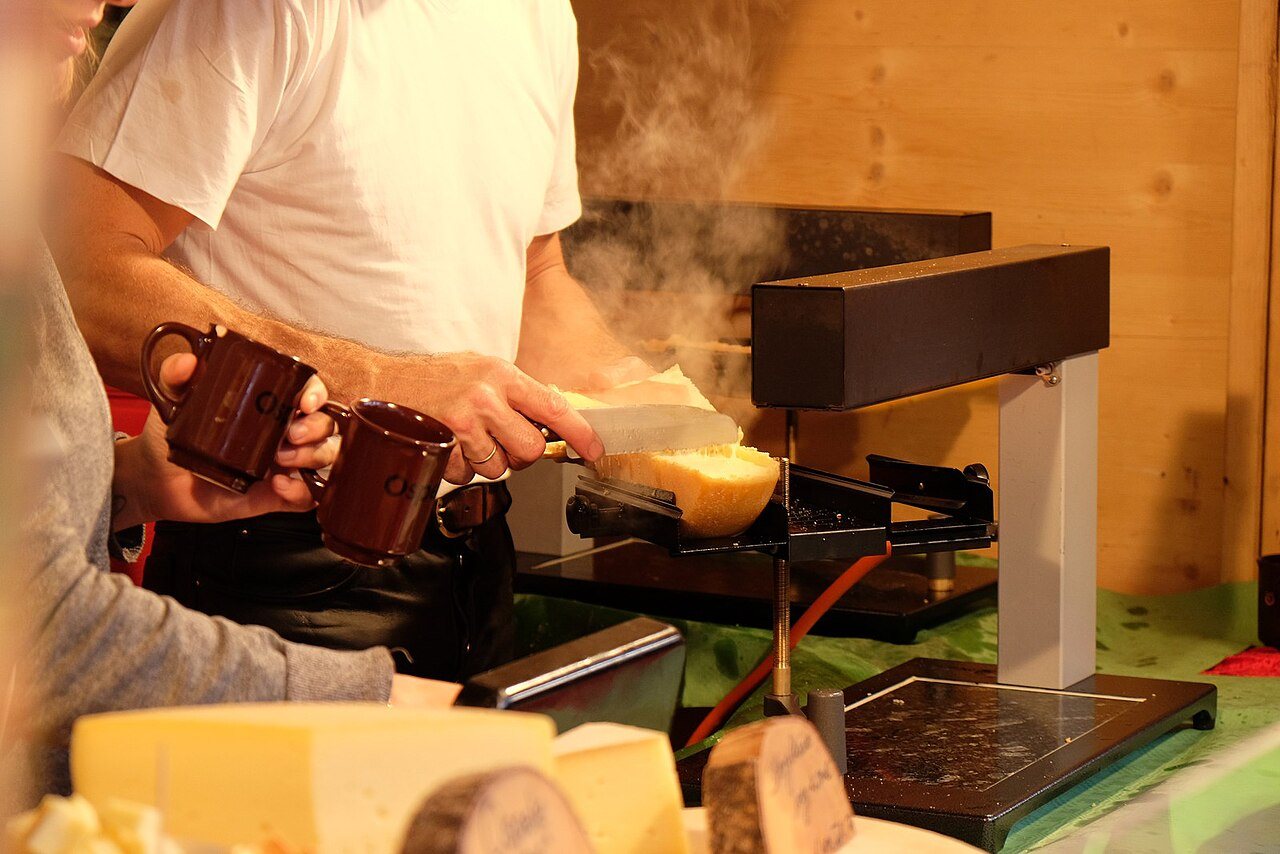
The first sign that raclette is on the menu is usually the smell. A half wheel of cheese sits under a heater, its cut face bubbling and browning, and every few minutes someone tilts it over a plate and scrapes off a molten sheet with the back of a knife. It lands on boiled potatoes, gets a few pickles alongside, and the whole thing is gone in about four bites.
Fondue is a different kind of meal. It's slower and more social, a pot of melted cheese and wine in the middle of the table and everyone dipping bread on long forks. Swiss people tend to have strong opinions on both, and on which belongs to which occasion.
From now until the end of ski season, these are the dishes you will see on almost every mountain restaurant menu in Switzerland. They are simple, but there is enough tradition around them that a little background makes the meal better.
Raclette started as a shepherd's supper in Valais
Raclette comes from the canton of Valais, in the southwest of the country, the region around Zermatt, Verbier and the Rhône valley. The name comes from the French verb racler, to scrape, and the dish is basically that: cheese melted by heat and scraped off.
The traditional story is that herders in the high pastures would set a piece of cheese near the fire in the evening and scrape the soft part onto bread or potatoes. Whether or not it began exactly like that, raclette has long been a Valais speciality, and the local cheese, Raclette du Valais, has protected AOP status, so only cheese made in the canton under set rules can use the name.
A classic plate has boiled potatoes in their skins, cornichons and small pickled onions, and maybe some air-dried meat on the side. The cheese is the point, and in many restaurants it is all-you-can-eat: they keep scraping until you tell them to stop.
The fondue you know was helped along by marketing
Melting cheese with wine is an old Alpine idea, and recipes for fondue go back centuries. But the dish became a national symbol in the 20th century with some deliberate help. The Swiss Cheese Union, a cartel that managed cheese production and exports, promoted fondue heavily from the 1930s onward as a way to sell more cheese, and later pushed it at home and abroad as Switzerland's national dish. It worked. By the 1960s and 70s fondue sets were a fixture in kitchens far beyond the Alps.
There is no single Swiss fondue. The famous moitié-moitié ("half and half") from the canton of Fribourg combines Gruyère and Vacherin Fribourgeois. Other regions use Gruyère with Emmental, or local cheeses. The basics are similar everywhere: a heavy pot rubbed with garlic, white wine, cheese stirred in until smooth, a little cornstarch to keep it together and often a splash of kirsch, the cherry brandy.
How to eat fondue without breaking the rules
Fondue comes with a set of unwritten rules, most of which are more fun than strict. Spear your cube of bread through the crust so it holds on the fork. Stir in a figure of eight or a gentle circle as you dip, which keeps the cheese from separating. Don't double-dip from the fork straight into your mouth and back; slide the bread onto your plate or eat it off the fork and keep that fork out of the pot.
If you drop your bread in the cheese, tradition says you owe the table something, usually a round of drinks, depending on who you ask. (Some tables take this very seriously.)
Save some interest for the end. The golden crust that forms on the bottom of the pot is called la religieuse, and in many households it is the best part.
What to drink with it
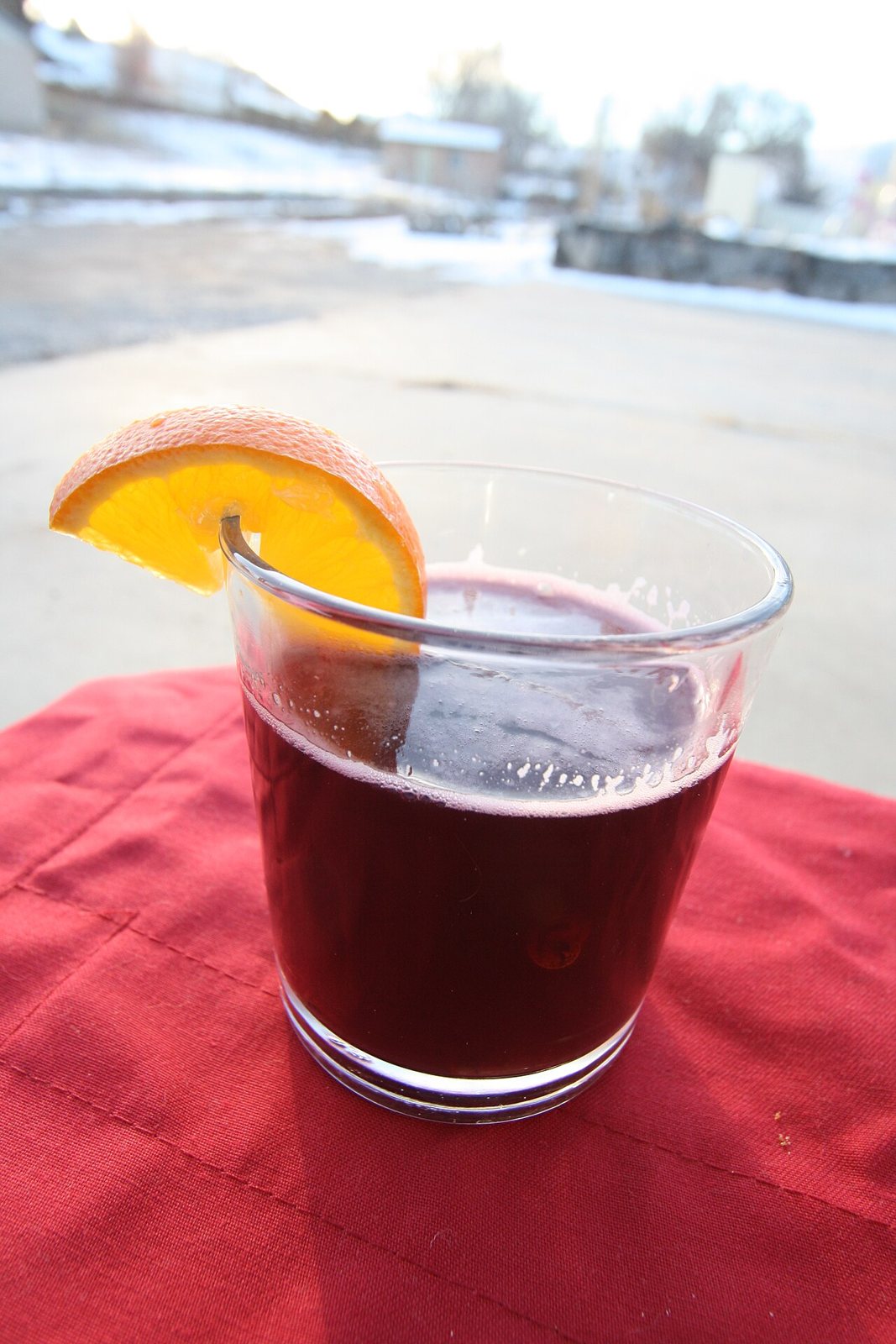
You'll hear plenty of Swiss people say you should drink white wine or hot black tea with fondue and raclette, never cold water or anything fizzy, because cold drinks supposedly make the cheese sit heavily in your stomach. I wouldn't call the science settled, but there is no harm in going along with it. A dry white from Valais, such as a Fendant made from Chasselas grapes, is the classic pairing either way, and it does go well with the richness.
Where to try them this winter
For raclette, Valais is the obvious place. Mountain restaurants around Zermatt, Saas-Fee and Verbier serve it, and in many towns you'll find it at winter markets too, scraped straight from the wheel as in the photo above.
For fondue, head to the canton of Fribourg and the village of Gruyères, where the cheese of the same name is made. There is a show dairy at the foot of the village where you can see production, then walk up to the medieval town for a pot of moitié-moitié. Zurich, Bern and Geneva all have old-fashioned fondue restaurants as well, popular with visitors and locals alike on cold evenings.
One practical tip: both dishes are meant to be shared and are often listed per person with a minimum of two. Order one less than you think you need, and add more cheese or potatoes if you are still hungry. You almost never will be.
See more of us on GoogleAdd TrueVoyager as a preferred source and our stories can show up more often for you in Top Stories.