Photo: DALIBRI, CC BY-SA 4.0, via Wikimedia Commons
The first thing you notice in Nuremberg's old town in December is the smell. Cinnamon, cloves, warm honey, a little orange peel. It drifts out of bakery doors and across the Hauptmarkt, where the Christkindlesmarkt fills the square with striped wooden stalls, and most of it comes from one thing: Lebkuchen, the city's soft spiced Christmas cake.
This year the market opens on Friday, November 27, the Friday before the first Sunday of Advent, when the Christkind reads her prologue from the balcony of the Frauenkirche. Plenty of people come for the lights, the toy stalls and the little figures made of prunes. I come for the Lebkuchen, and I'm not going to pretend otherwise.
If you've only met German gingerbread as a hard, shiny heart on a ribbon, Nuremberg's version will surprise you. It's closer to a dense, moist nut cake than a cookie.
Why Nuremberg, of all places
Two things made Nuremberg a gingerbread city in the Middle Ages. It sat on major trade routes, so merchants brought in pepper, cinnamon, cloves, nutmeg and other spices that were expensive almost everywhere else in Europe. And the forests around the city were full of beekeepers, so honey, the main sweetener before sugar was cheap, was close at hand.
Records of Lebkuchen bakers in the city go back to the late 1300s, and by 1643 the bakers had organized their own guild. Over time "Nürnberger Lebkuchen" became a name worth protecting. Today it is a protected geographical indication in the European Union, which means Lebkuchen sold under that name have to be made within the city.
What makes a good Lebkuchen
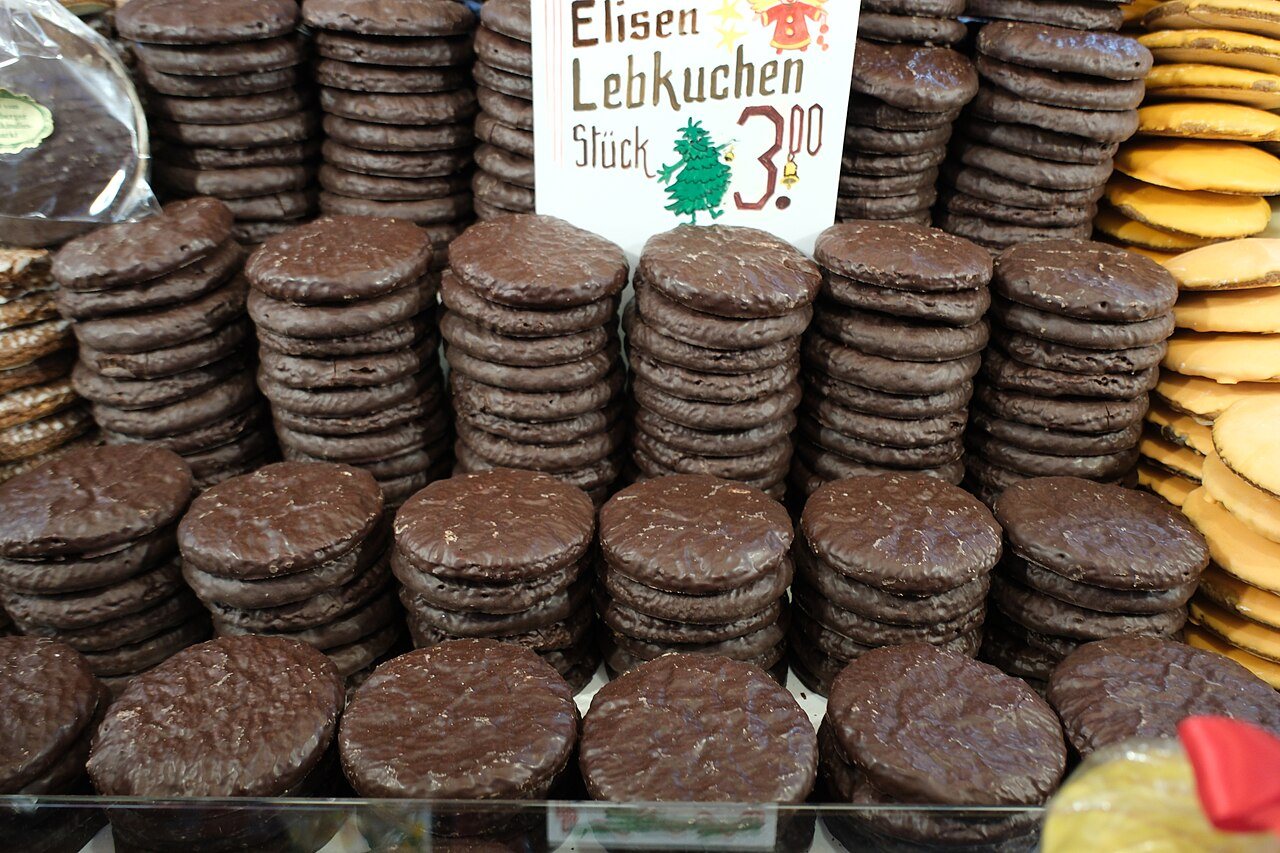
The top grade is Elisenlebkuchen. Under German food guidelines, these must contain at least 25% nuts, typically almonds, hazelnuts or walnuts, and very little flour, no more than 10%. Some of the best bakeries use far more nuts than the minimum and hardly any flour at all, which is where the soft, almost marzipan-like texture comes from.
They're baked on Oblaten, thin round wafers that look a lot like communion wafers and keep the sticky dough from clinging to the tray. You eat the wafer too; it's papery and neutral and mostly there to hold things together. On top you'll find a sugar glaze, a coat of dark chocolate, or nothing but a few blanched almonds pressed into the surface.
Where the name Elisen comes from is less clear. A popular story credits a baker's daughter named Elisabeth, but it's one of those tales that every guide repeats and nobody can quite pin down, so I'd treat it as a nice legend.
How to buy them in Nuremberg
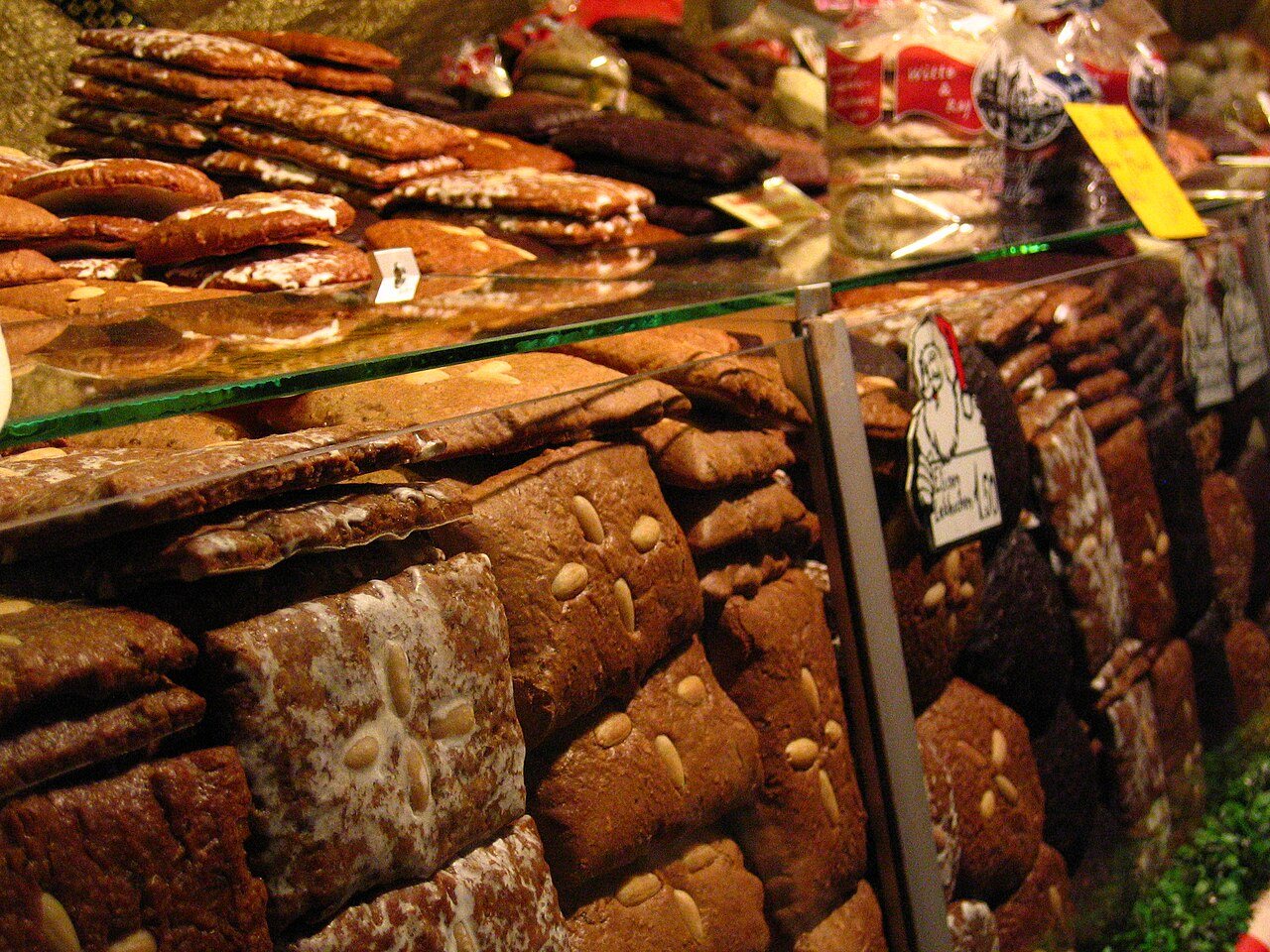
Glazed and plain Lebkuchen topped with blanched almonds in a glass case at a Nuremberg stall. Photo: charley1965 on Flickr, CC BY-SA 2.0, via Wikimedia Commons
The market stalls sell Lebkuchen in every form, from loose pieces to gift tins painted with old Nuremberg scenes. The old town's bakeries and specialist Lebkuchen shops are often a better bet, though, because you can see what's fresh and ask what's in it.
A few things help. Read the label for the word Elisenlebkuchen if you want the nutty, soft style. Look at the ingredients: nuts should come near the top, ahead of flour. Squeeze gently if you're allowed; a good one gives a little. And try the plain or almond-topped kind before the chocolate-covered ones, because chocolate can hide a dry crumb.
The decorated hearts with icing messages are a different product. They're made to be hung up and admired, and while you can eat them, they're harder and much less interesting. (They make a good gift for a child, who will not care about any of the above.)
Gingerbread elsewhere in Germany
Nuremberg isn't the only German city with a strong claim. Aachen makes Printen, firm, dark, spiced bars with a crunch from rock sugar, and they're protected under their own regional name. In Saxony, the small town of Pulsnitz has been making Pfefferkuchen for centuries and holds its own gingerbread market in November.
If you're doing a Christmas market trip through Germany, it's fun to taste them side by side. They're related, but they don't really taste alike.
Taking some home
Lebkuchen travel well, which is part of why they became a Christmas gift in the first place. Unopened packages keep for weeks, and the tins are sturdy enough to survive a suitcase. Once opened, store them in a tin rather than a plastic bag. An old trick for keeping them soft is to add a slice of apple to the tin for a day or two, then take it out before it starts to spoil.
If you're flying, check your airline's rules and your home country's customs rules for food. Baked goods are usually fine, but rules vary and it's worth a look before you fill a bag.
If you go this season
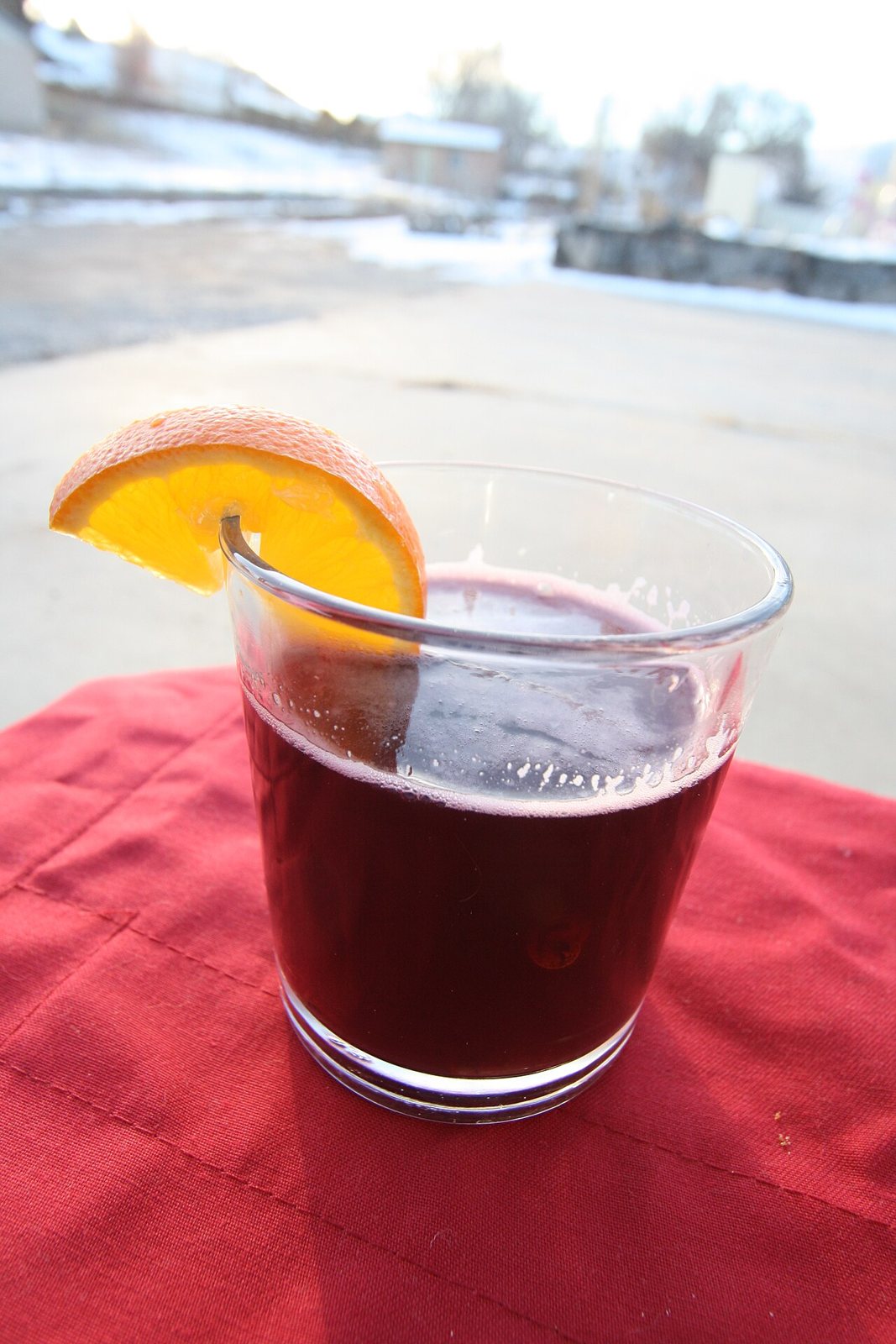
The Christkindlesmarkt runs from November 27 to December 24 this year, with the busiest crowds on weekend evenings. Go on a weekday morning if you can, buy your Lebkuchen early, and eat one with a mug of mulled wine standing up at the edge of the Hauptmarkt. It's the best way I know to understand why this city has been baking them for more than 600 years.
See more of us on GoogleAdd TrueVoyager as a preferred source and our stories can show up more often for you in Top Stories.